

Imagine you want to buy something using crypto from a coffee shop in Portland or send funds to a contractor across state lines without your ISP, exchange, or a curious third party being able to stitch together your identity. You’ve read about privacy coins, Tor, and hardware wallets; you’ve even installed a multi-currency app. But how private are your transactions in practice? Which pieces of the stack actually protect you, which are theater, and where do operational mistakes undermine the best technical design? This article breaks down those questions using concrete mechanisms from modern privacy-focused wallets and corrects common misconceptions so you can make operationally useful decisions.
We’ll focus on three practical families of tools you’ll encounter: Monero-grade native privacy, Bitcoin privacy primitives, and Litecoin’s MWEB option—then map those to custody and network trade-offs, device-level attack surfaces, and cross-chain convenience. Along the way I’ll highlight one reusable framework for choosing and operating a wallet that balances “privacy” against “risk surface” in a way that matters in everyday U.S. contexts.
Myth 1 — One Wallet Solves Everything: The reality of multi-currency, multi-model privacy
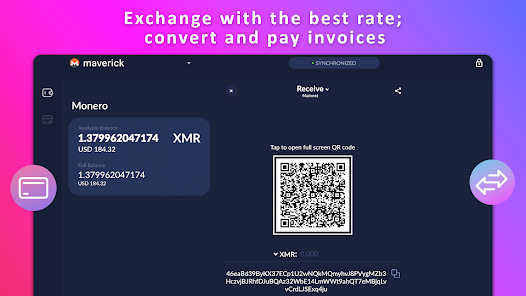
It’s tempting to believe a single wallet that lists Monero, Bitcoin, Litecoin, and Zcash makes all those assets equally private. That’s false because privacy properties are protocol-level, not merely app-level. Monero is private by design: ring signatures, stealth addresses, and confidential transactions mean that the ledger itself resists linkage. When a wallet supports native Monero well—keeping the private view key on-device, supporting subaddresses, and background sync—it preserves the protocol’s privacy guarantees in routine use. But “preserves” is the key word: operational errors (leaking view keys, using public nodes, or exposing IPs) can still degrade privacy.
By contrast, Bitcoin and Litecoin are UTXO-based and transparent by default. Wallets can layer privacy-enhancing techniques—PayJoin v2, Silent Payments, coin control, UTXO selection, batching, and Litecoin’s MimbleWimble Extension Blocks (MWEB) for optional confidentiality—but these are opt-in and incomplete. Litecoin’s MWEB support gives users an optional privacy layer, but it’s different from Monero’s default model; it hides amounts within MWEB blocks but does not magically anonymize all past transparent UTXOs unless you explicitly move funds into MWEB capacity. So a single app can offer tools across chains, but the protection you get depends on which chain you use and which options you enable.
Myth 2 — “No telemetry” means complete anonymity
Many reputable wallets operate under a strict zero data collection policy: no telemetry, no IP logs, no device identifiers. That’s an important baseline because centralized telemetry can trivialize deanonymization. However, zero telemetry from the developer does not remove other unavoidable metadata leaks: node connections, blockchain fingerprints, and off-chain interactions still exist. The wallet’s network stack determines whether your IP is exposed to peers or whether a locally running node or Tor/I2P proxy mediates connectivity.
Operationally, three network modes matter: direct node connections (fast, potentially revealing), Tor-only mode (strong network anonymity but with latency and occasional blocking), and custom user-selected nodes (best for trust control but requiring care to avoid using an observer-controlled node). If you pair a no-telemetry wallet with Tor or I2P and connect to your own nodes when feasible, you significantly reduce network-level deanonymization risk. But that increases operational complexity and imposes availability trade-offs—Tor is sometimes blocked or slow, and running a full node requires storage and maintenance.
How the mechanics of privacy features change the risk model
Let’s translate tool names into what they actually accomplish and what they leave exposed.
- Monero: keeps amounts, sender and recipient obfuscated on-chain. The wallet’s job is to keep the private view key and spend key safe; background sync and subaddresses reduce address reuse. Main residual risk: metadata from network connections and any copy of the view key leaving the device.
- Bitcoin: privacy comes from coordination (PayJoin, PSBT coin control, batching) and obscuring UTXO linkage. These are heuristics rather than cryptographic secrecy; statistical chain-analysis techniques can often re-link transactions, especially if you reuse addresses or use bright-line exchange services.
- Litecoin + MWEB: MWEB allows confidential amounts in an extension block; but amounts and participants are private only when funds are actively moved into and out of MWEB. The rest of the chain remains transparent.
Understanding the difference matters: Monero’s privacy is structural; MWEB and PayJoin are shades of opacity layered onto transparent chains. Each layer affects how an adversary—an exchange, an on-chain analyst, or a subpoena—can reconstruct linkages.
Custody and attack surface: device-level and hardware integrations
Security starts with custody. Open-source, non-custodial design means private keys never leave your device by default. But “device” is a complex surface: the hardware enclave (Secure Enclave on iOS, TPM on Android) can materially raise the cost of key extraction versus a software-only keystore. Local PINs and biometrics gate access, but they’re not substitutes for a properly sealed backup strategy: a stolen device with an accessible PIN or compromised backups can still leak keys.
Hardware wallet integration—Ledger and air-gapped solutions like Cupcake—changes the calculus. Air-gapped signing minimizes exposure because signing keys never touch networked devices. But coupling hardware devices to a convenience-focused mobile app creates UX friction and new bridging code paths that must be audited. The non-obvious trade-off: better offline protection at rest versus a larger, more complex software stack for day-to-day transactions.
Cross-chain swaps, NEAR Intents, and privacy trade-offs
Built-in exchange and cross-chain swaps are immensely convenient. Systems like NEAR Intents perform decentralized routing across multiple market makers to find competitive rates without central custody. But routing and settlement involve counterparties and on-chain footprints that can leak linkage information—swap order sizes, timestamps, and liquidity provider behaviors are observable traces. Using a decentralized routing mechanism reduces counterparty custody risk but does not nullify on-chain linkability unless the swap protocol itself uses privacy-preserving settlement channels.
What this means in practice: if privacy is your priority, minimize on-chain linkages between privacy and non-privacy assets. For example, avoid direct swaps that move funds from a Monero wallet straight into transparent BTC addresses without an intermediate privacy-preserving hop or careful coin control. The wallet’s built-in swap is convenient, but it’s not a magic privacy hole—inspect the settlement flow if you have high threat models.
A practical operational framework: the Three Control Axes
When choosing and operating a privacy wallet, think in three axes: custody control, network anonymity, and protocol privacy. Map your desired outcome onto these axes and make explicit trade-offs.
– Custody control: How isolated are the private keys? Local hardware enclave vs. air-gapped hardware vs. software keystore. Higher custody control usually costs more convenience.
– Network anonymity: How are IPs and node connections handled? Tor/I2P/custom node vs. default peer-to-peer. Stronger anonymity requires higher operational burden and occasional reliability trade-offs.
– Protocol privacy: Which chain-level privacy primitives are available and active? Monero is strong by default, MWEB is optional on Litecoin, and Bitcoin features are heuristic rather than cryptographic.
Use this simple heuristic: If any axis is weak, the other two must be correspondingly stronger to preserve your threat model. For example, if you must use a custodial exchange (low custody control), you should elevate network anonymity and prefer protocol-level privacy before moving funds through that exchange.
Where privacy breaks and what to watch next
Privacy is fragile. Common failure modes include address reuse, using public nodes, restoring wallets on compromised machines, and sloppy linking across exchanges and social accounts. Technology also shifts: improvements in chain analytics, legal data requests, and cross-service data aggregation can increase deanonymization power. Watch for changes in regulatory pressure on privacy layers (e.g., MWEB or zero-knowledge features), broader rollout of mandatory KYC that links on-chain flows to identities, and improvements in wallet network stacks (wider Tor adoption or integrated private relays).
Operationally, keep an eye on three signals: wallet updates that change node defaults, evidence of telemetry or centralized analytics appearing in client code, and any incompatibilities in migration paths (for example, the known Zcash migration limitation where Zashi seeds aren’t compatible, requiring manual transfers). Those are not theoretical—they materially affect whether your past assumptions about safety still hold.
For users who want a practical place to start with multi-currency privacy tools, a wallet that is open-source, non-custodial, supports Monero correctly (private keys retained on device), offers network anonymity modes (Tor/I2P), and integrates hardware signing will minimize common attack vectors while keeping convenience reachable. You can explore such an option through platforms like cake wallet, which bundles many of these features while leaving clear operational choices in the user’s hands.
Decision-useful takeaways
1) Don’t conflate convenience with privacy. A wallet that supports many chains may not protect you equally across them—read the defaults and enable privacy modes deliberately.
2) Protect keys first. Prefer hardware or air-gapped signing for significant balances; treat device-level encryption as necessary but not sufficient.
3) Network anonymity is a multiplier. Using Tor or custom nodes materially reduces exposure; if you can’t run a node, use Tor and avoid public nodes.
4) Use the Three Control Axes to map your threat model and choose compensatory controls.
FAQ
Is Monero always private if I use a privacy-focused wallet?
Monero’s protocol is private-by-default, but wallet behavior matters. If the wallet leaks the private view key, connects to public nodes without Tor, or you reuse subaddresses, you can weaken privacy. Choose a wallet that keeps keys on-device, supports subaddresses, and offers Tor/I2P or custom nodes.
How does Litecoin’s MWEB compare to Monero privacy?
MWEB provides confidential transactions for amounts inside the extension block, which improves privacy for those operations. It is optional and not equivalent to Monero’s systemic privacy. For full privacy benefits you must move funds into MWEB and avoid leaving traceable transparent UTXOs linked to your identity.
Can built-in swaps deanonymize my funds?
Yes, swaps create on-chain and off-chain metadata. Decentralized routing like NEAR Intents reduces centralized custody but does not automatically erase linkable transaction footprints. If privacy is essential, examine the swap settlement flow and consider splitting or timing trades to reduce traceability.
Should I always use Tor-only mode?
Tor-only mode gives strong network anonymity but can introduce latency and availability issues (some services block Tor exit nodes). It’s a strong default when privacy is primary. For high-value transfers you might pair Tor with hardware signing and custom node verification.
What’s the simplest operational change that improves privacy right now?
Avoid address reuse, enable Tor/I2P or connect to trusted nodes, and use subaddresses (for Monero) or coin control (for Bitcoin) to reduce linkability. Pair that with secure backups of your seed phrase stored offline.